Peanut preparation: shelling, grading, roasting, and aflatoxin control
Pretreatment hard data: drum sheller residue <2%, kernel grading 1000-kernel weight 400-700 g, moisture conditioning to 5-8%, roast 160-180°C × 20-30 min in drum or wok (50-200 kg/batch), aflatoxin B1 <20 μg/kg via UV/HPLC sorting.
Pre-press preparation: drum sheller (shell residue <2%), grading screen, moisture conditioning to 5-8%, drum/wok roaster 160-180°C × 20-30 min, aflatoxin sorting <20 μg/kg.
Shelling specification
Drum sheller (capacity 300-1000 kg/h pods) → grading screen → wind separator. Target shell residue in kernel <2%, broken kernels <5%, foreign matter <0.1%.
Roasting specification
Drum roaster 160-180°C × 20-30 min, batch 50-200 kg, color L* 50-60. Or wok roaster (traditional, 50-100 kg/batch). Cold route: skip roasting, ambient ≤60°C feed.
Moisture and aflatoxin
Moisture target 5-8% (>10% blocks press cake formation; <4% over-dried cake cracks). Aflatoxin B1 <20 μg/kg by UV sorting at intake + HPLC lab test per inbound lot.
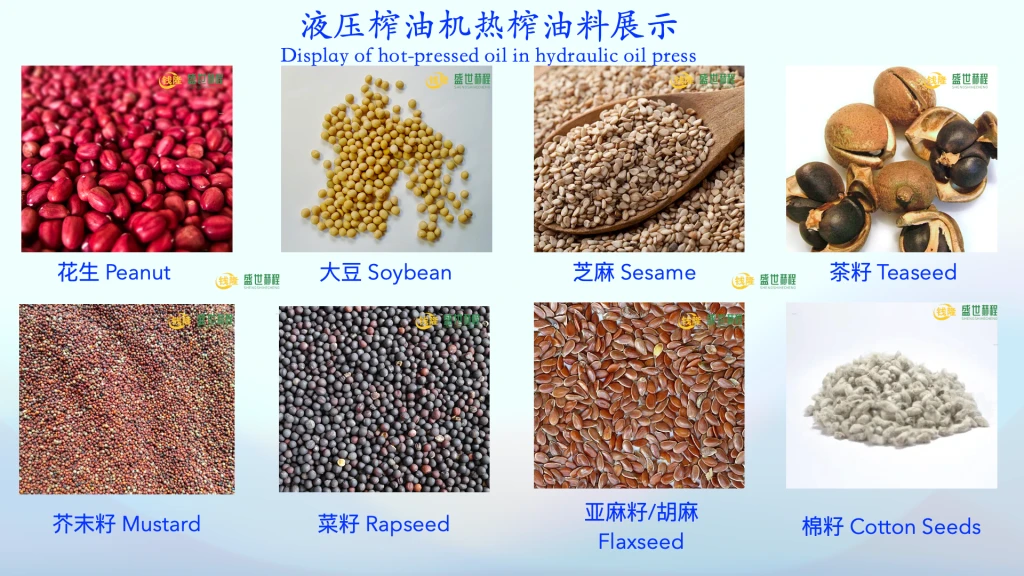
Why prep dominates
Why shelling and roasting decide the press outcome before tonnage
Peanut press performance is set upstream. Kernel oil 44-56% only converts to yield 40-48% when shell residue <2%, moisture 5-8%, roast 160-180°C × 20-30 min, and damaged/moldy kernels rejected. Without these, even a 500-ton press underperforms.
Peanut shelling, cleaning, and feed condition
Use this clip to decide whether shelling, cleaning, and grading belong in the current phase.
 Feed route
Separate pods, shelled kernels, and graded kernels
Different feed starting points change prep, roasting, pressing, and filtration scope.
- Shell residue <2% (otherwise barrel partitions clog, pressure drops, residual cake oil rises >10%).
- Moisture 5-8% (>10% prevents cake formation; <4% gives brittle cake and oil bypass channels).
- Roast color L* 50-60 (hot route) — too light = under-developed cell rupture, too dark = scorched flavor and PAH risk.
Module specifications
Pretreatment modules with capacity ranges
Drum sheller + grading
Capacity 300-1000 kg/h pods (shell 30-40%). Output: kernels (60-70% by weight) + shells. Add vibrating grader for size uniformity (1000-kernel 400-700 g).
Drum roaster 160-180°C
Stainless steel drum, gas or electric, 50-200 kg/batch, 20-30 min residence time. Continuous belt roasters also available for >500 kg/h flow. Log temperature curve per batch.
Flat-bottomed electric wok
Traditional 小榨花生油 setup, 50-100 kg/batch, manual stirring or motorized paddle. Lower throughput but stronger aroma development. Common in artisan peanut oil mills.
Inquiry inputs
Preparation data that closes the quote loop
- Pods or kernels? If pods, shell content (30-40%) and shelling capacity needed (kg/h).
- Kernel grade: 1000-kernel weight, broken-kernel %, moisture %, foreign matter %.
- Aflatoxin status: lab certificate per lot, UV sorter present? Storage RH <70%?
- Roasting: drum (continuous) or wok (batch)? Target temperature (160-180°C) and time (20-30 min)?
- Cake target: feed grade, food-grade peanut flour (defatting + grinding), or local resale?
Project boundary
What to confirm before scoping Peanut Shelling and Roasting | Shell <2%, Moisture 5-8%, Roast 160-180°C
Peanut Shelling and Roasting | Shell <2%, Moisture 5-8%, Roast 160-180°C should not be quoted from an equipment name alone. Check feed lots, target oil, post-press handling, and packing rhythm in one scope before deciding which Peanut Oil Press modules stay. Listed on the factory hot-press page — discuss 300/325 first.
When feed condition, moisture, impurities, batch weight, and product position are unclear, press tonnage and filter area become guesswork. Factory systems share 60 MPa and 2.2 kW motors; hot pure press is 30–40 min/barrel and cold pure press is ~2 h/barrel — cycle time matters more than brochure tonnage.
- Confirm whether feed is whole seed, kernels, pretreated material, or an existing semi-finished stream.
- Confirm whether the target is crude oil, filtered oil, bottled oil, drum ingredient oil, or a refining handoff.
- Hot cycle reference: pure press 30-40 min/barrel, ~1.5 h for 2 barrels with loading; cold pure press ~2 h/barrel, ~4.5 h for 2 barrels.
- Confirm batch rhythm, labor, changeover, retained samples, power (often 380V/50Hz/3ph), and site install conditions.
Factory model check
Match hot / cold models to factory hard data
When discussing Peanut Shelling and Roasting | Shell <2%, Moisture 5-8%, Roast 160-180°C, pin models to published factory specs — not tonnage alone.
Hot 300/325: 300–325 ton, 60 MPa system, standard barrel Ø390×800 mm / max 100 kg, pure press 30–40 min/barrel, ~1.5 h for 2 barrels with loading, 2.2 kW motor. Cold 355/400/426/480/500: 370–630 ton, integrated frame, same 100 kg standard barrel, pure press ~2 h/barrel, ~4.5 h for 2 barrels with loading; optional Ø300 high-pressure barrel max 60 kg. Residual oil target ~≤5% (peanut hot often 6–8% measured).
- Standard barrel Ø390×800 mm, max ~100 kg crushed feed; optional Ø300 high-pressure barrel max ~60 kg.
- Cylinder material 27SiMn; cold frames are integrated molded steel; hot frames are typically H-type channel steel.
- Listed on the factory hot-press page — discuss 300/325 first.
Equipment check
project scope needs to land in equipment interfaces
After Peanut Shelling and Roasting | Shell <2%, Moisture 5-8%, Roast 160-180°C is clear, write the interfaces: how preparation feeds the press, how oil leaves the press, how filtration connects to tanks, and how packing receives finished oil.
Front-end input
Record feed form, daily volume, moisture, and sorting needs so pretreatment is not left to operators.
Filtration, tanks, and peanut cake
Define pneumatic/plate-frame filtration, tanks, retained samples, and cake offtake before press count. Factory hot lines often use multi-layer paper filters.
Delivery data
Prepare space, power (often 380V/50Hz/3ph), labor, target package, local rules, and acceptance method before quotation.
Questions to confirm next
Clear these up first
Shell residue in kernel <2%, broken kernels <5%. Above 2%, partitions in the press barrel clog, pressure distribution becomes uneven, residual cake oil rises above 10%, and yield drops by 3-5 percentage points. Use drum sheller + grading screen + wind separator.
Read this next
These next pages move the discussion forward
Buying guides
Hydraulic vs Screw Oil Press for peanut: Which Fits Your Mill?
Compare hydraulic batch press vs continuous screw (expeller) for peanut: oil quality, cold-press ability, capacity, residual oil, labor, and when each route wins. Use this before you request a quote.
Continue →Buying guides
peanut Hydraulic Press Capacity: Barrels per Shift and How Many Presses
Size peanut hydraulic capacity with real cycles: hot pure press 30-40 min/barrel (~1.5 h for 2 barrels with loading); cold ~2 h pure / ~4.5 h for 2 barrels. Example math for 1–5 t/day small mills.
Continue →Buying guides
peanut Oil Press Inquiry Checklist: Data That Gets a Real Quote
RFQ checklist for peanut hydraulic oil press projects: seed form, kg/shift, hot/cold, filtration, cake path, power, country, and photos. Incomplete inquiries get catalog replies — complete packs get model counts and line scope.
Continue →Send this page's requirement to the factory
Bring feed condition, target output, and site constraints, and we will continue from what this page covers.