Front-end input
Record feed form, daily volume, moisture, and sorting needs so pretreatment is not left to operators.
Capacity sizing
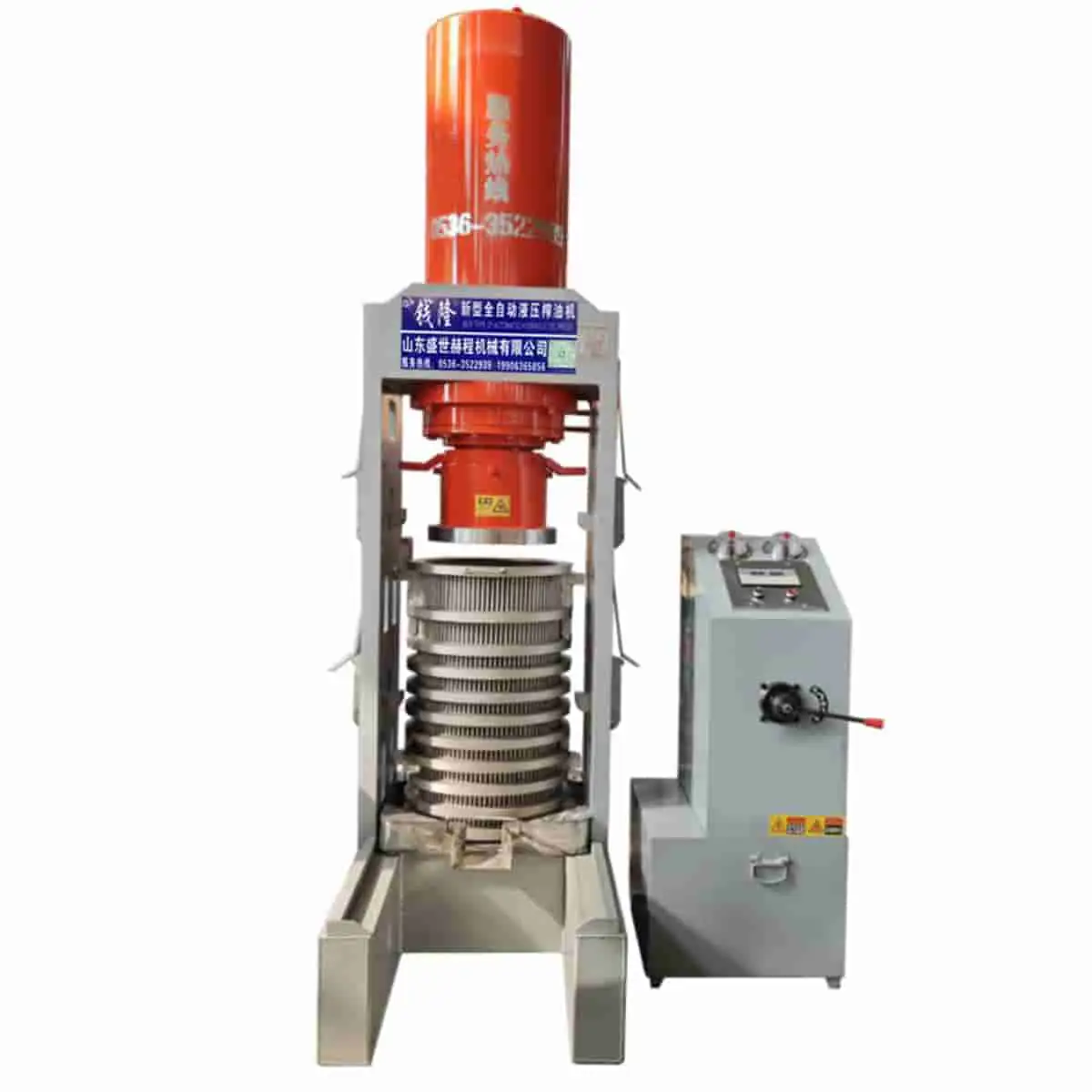
Factory peanut lines are sized from batch rhythm. System 60 MPa, motor 2.2 kW, standard barrel Ø390×800 mm / up to 100 kg crushed feed (sesame fine-seed often ~30 kg). Factory peanut hot line: pre-press ~500 kg/h → 5 × electric flat-bottomed wok (~100 kg each) → 5 × 325 hydraulic presses (14 partitions, Ø390×800 mm barrel, up to 100 kg crushed powder; practical feed often ~60 kg to sav
Worked examples
If one press averages about 5–6 two-barrel cycles in 8 h (~1.5 h per 2 barrels with loading), feed is roughly 10–12 barrels × up to 100 kg ≈ 1.0–1.2 t seed/shift per press (less for sesame ~30 kg/batch). Five presses in parallel approach multi-ton/day when pretreatment keeps up — matching factory peanut line stories (pre-press ~500 kg/h feeding multiple 325s).

Bottleneck
For a real quote
Project boundary
peanut Hydraulic Press Capacity should not be quoted from an equipment name alone. Check feed lots, target oil, post-press handling, and packing rhythm in one scope before deciding which Peanut Oil Press modules stay. Listed on the factory hot-press page — discuss 300/325 first.
When feed condition, moisture, impurities, batch weight, and product position are unclear, press tonnage and filter area become guesswork. Factory systems share 60 MPa and 2.2 kW motors; hot pure press is 30–40 min/barrel and cold pure press is ~2 h/barrel — cycle time matters more than brochure tonnage.
Factory model check
Pin models to published factory specs before tonnage talk.
Hot 300/325: 300–325 ton, 60 MPa system, standard barrel Ø390×800 mm / max 100 kg, pure press 30–40 min/barrel, ~1.5 h for 2 barrels with loading, 2.2 kW motor. Cold 355/400/426/480/500: 370–630 ton, integrated frame, same 100 kg standard barrel, pure press ~2 h/barrel, ~4.5 h for 2 barrels with loading; optional Ø300 high-pressure barrel max 60 kg. Residual oil target ~≤5% (peanut hot often 6–8% measured).
Equipment check
Once the route is clear, write the interfaces: how preparation feeds the press, how oil leaves the press, how filtration connects to tanks, and how packing receives finished oil.
Record feed form, daily volume, moisture, and sorting needs so pretreatment is not left to operators.
Define pneumatic/plate-frame filtration, tanks, retained samples, and cake offtake before press count. Factory hot lines often use multi-layer paper filters.
Prepare space, power (often 380V/50Hz/3ph), labor, target package, local rules, and acceptance method before quotation.
Often 1–2 hot 325-class presses if pretreatment is ready and barrels run near 100 kg; cold routes need more presses or longer shifts for the same seed tons. Always recalculate with your real cycle and seed fill weight.
Nameplate tons are downforce class (300–630 ton). Throughput is barrel weight × cycles/day × press count. Factory pages publish cycle times for that reason.
Related guides
Compare hydraulic batch press vs continuous screw (expeller) for peanut: oil quality, cold-press ability, capacity, residual oil, labor, and when each route wins. Use this before you request a quote.
RFQ checklist for peanut hydraulic oil press projects: seed form, kg/shift, hot/cold, filtration, cake path, power, country, and photos. Incomplete inquiries get catalog replies — complete packs get model counts and line scope.
2026 factory price bands for peanut hydraulic presses: hot 300/325 about US$2000-5000, cold 355 about US$4000-7000, large cold 400–500 about US$8000-15000+. What drives the quote and how to compare offers.
What oil yield to expect from peanut on a hydraulic press, why residual oil in cake is the number that matters, and the moisture, heat, pressure, and barrel factors that raise yield without fake promises.
Include peanut, hot/cold, hours/shift, and country. We reply with a press-count range and missing pretreatment modules.